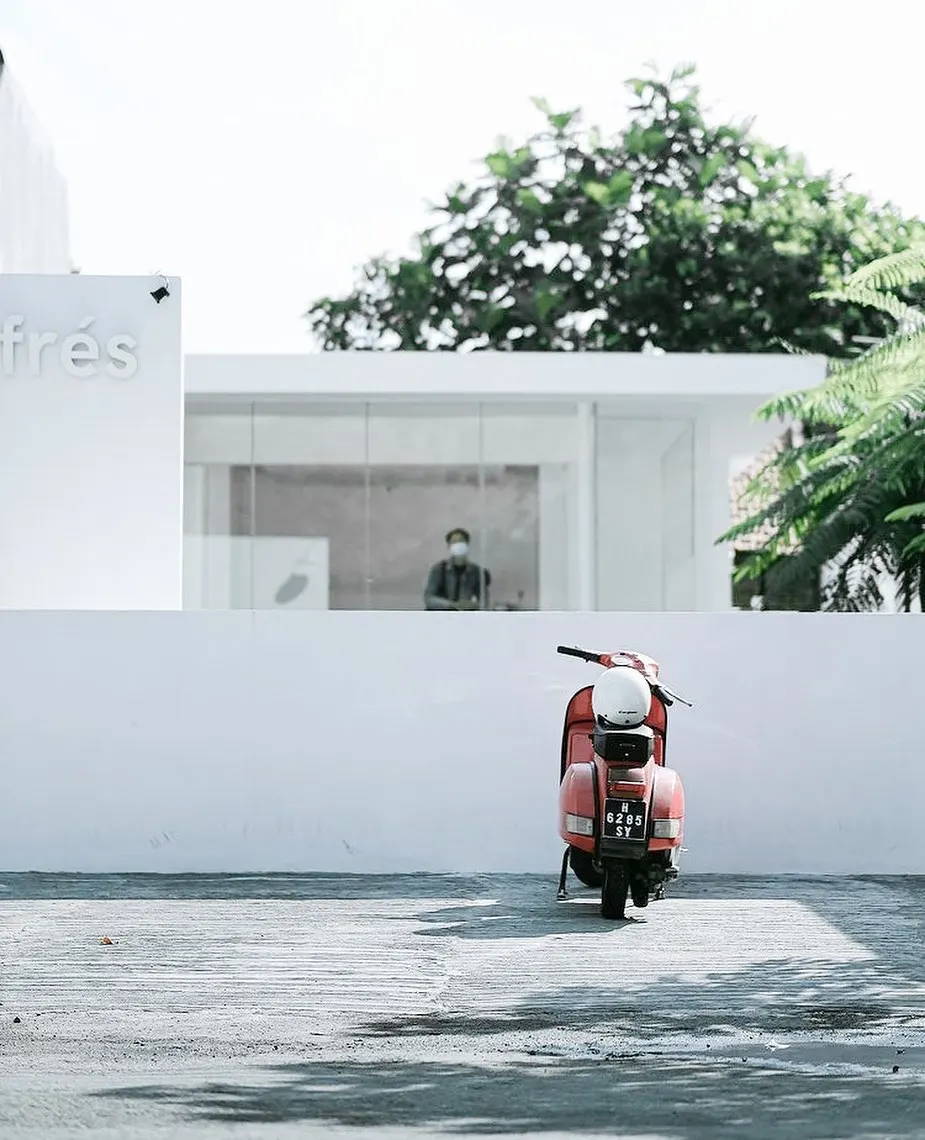
Frés Semarang begins not with openness, but with restraint. From the parking area, visitors are guided into a narrow entrance corridor, bordered by solid concrete walls that deliberately limit views and suppress expectation. At this moment, the space feels closed, almost ambiguous, inviting a quiet curiosity about what lies beyond. The architecture withholds itself, allowing anticipation to build through movement rather than signage or spectacle. This brief compression becomes an intentional pause, separating the city outside from a more inward and sensorial experience ahead.
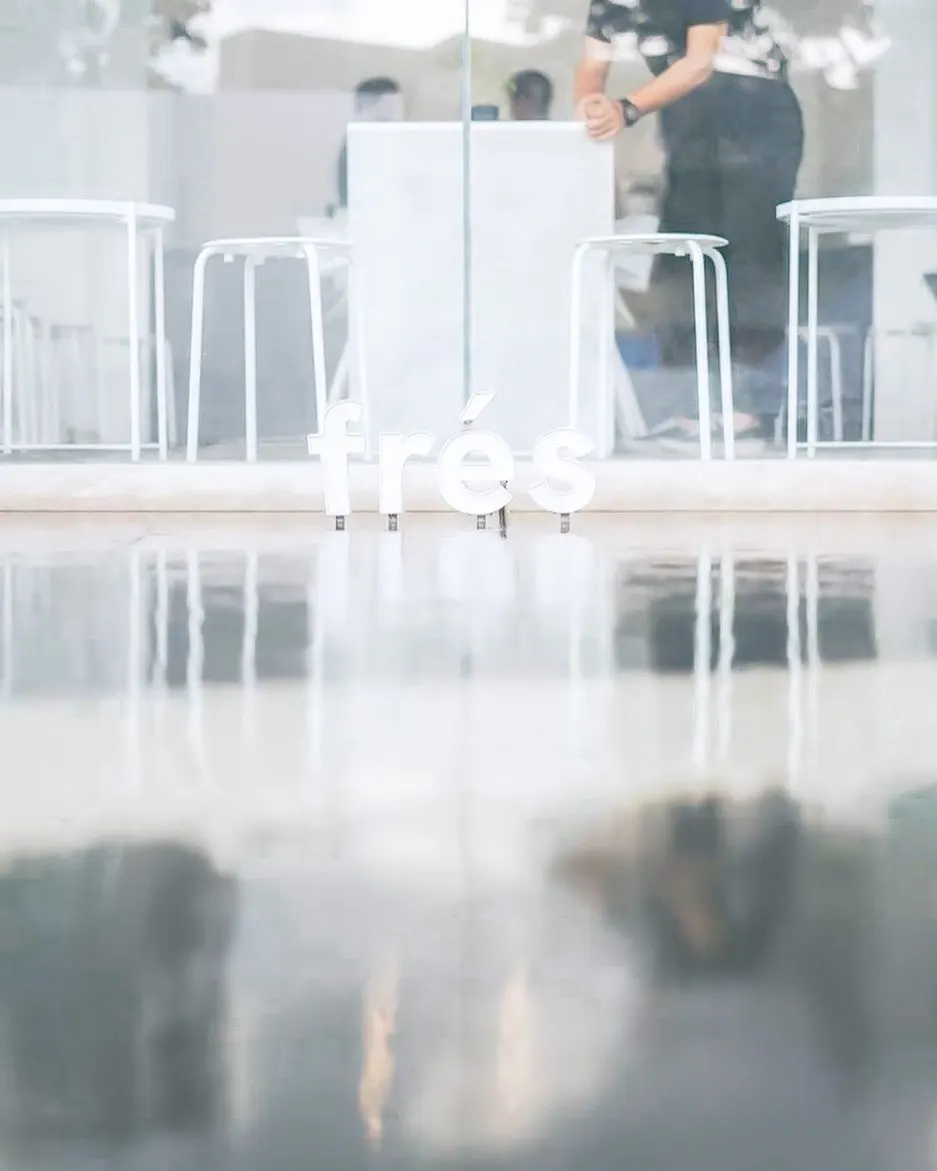
As the corridor opens, the space releases itself into a generous outdoor court. A reflective pool sits at its center, anchored by concrete tables that hover just above the water, inviting people to gather slowly and linger. Light, reflection, and stillness define this open area, creating a calm counterbalance to the earlier sense of enclosure. Beyond the pool, a fully transparent glass volume reveals the indoor space and juice bar within. The boundary between inside and outside dissolves, allowing activity, light, and movement to remain visible and connected. In this layered sequence, Frés becomes less about the act of ordering juice and more about the experience of arrival, pause, and presence, where architecture heightens awareness through contrast, curiosity, and quiet release.